
Arcade: Designing
for Creative Scale
Exploring how AI design tools can support collections and collaboration, not just one-off outputs.
Self-initiated product exploration


I came across Arcade, an AI platform that lets users generate and sell products from prompts, and was struck by how powerful it is for quick, one-off designs.
I wanted to explore how the product could grow by focusing on creators as the core users and rethinking their workflows and use cases
How This Started
Where It Breaks Down
Where the Current Experience Falls Short
Designs are generated individually, making it hard to build cohesive product lines
There is no structured way to evolve an idea across multiple outputs
Remixing exists, but the creative lineage is not visible
Too one-off
Limited iteration
Hidden collaboration
Dream Collections
Solution 1:
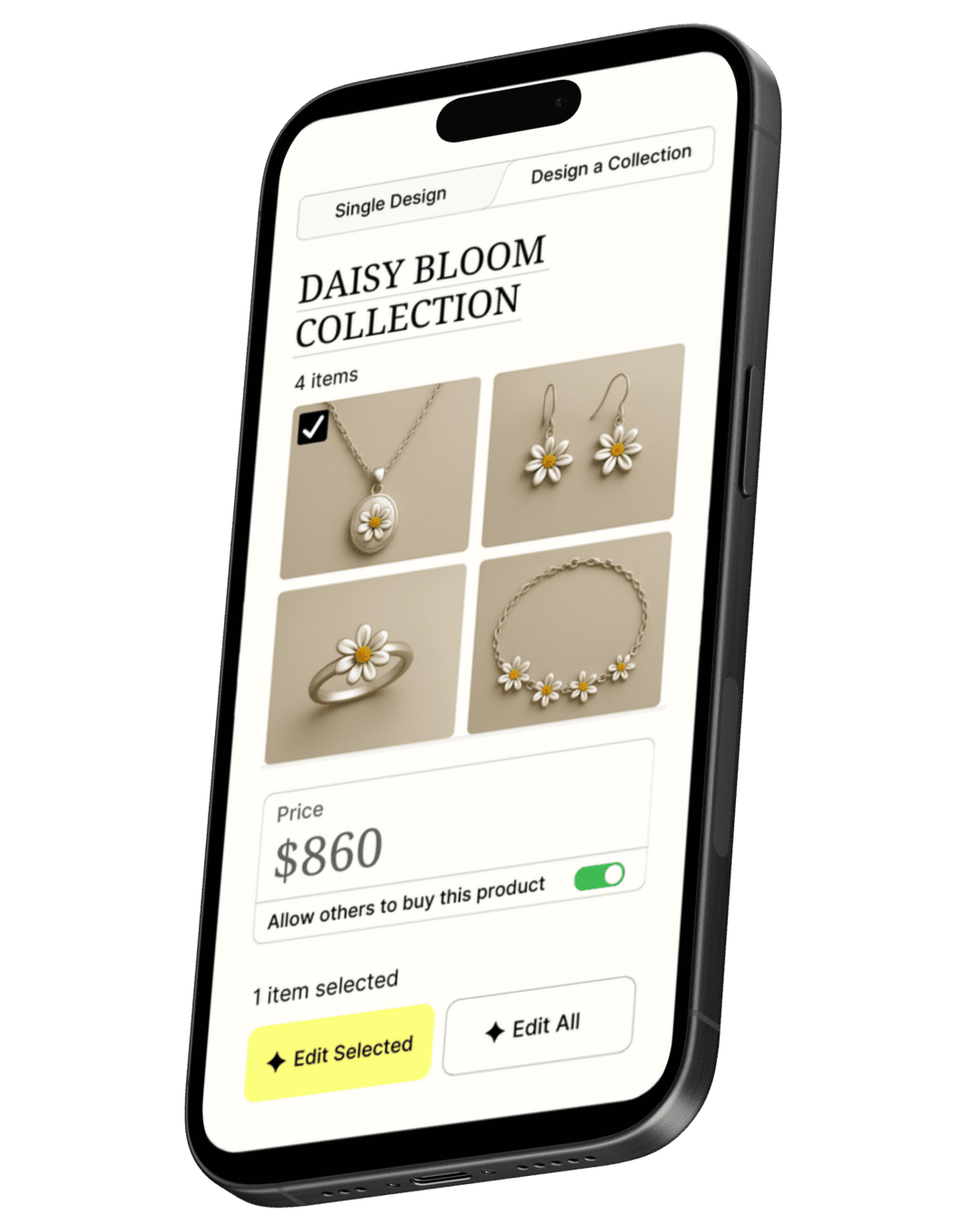
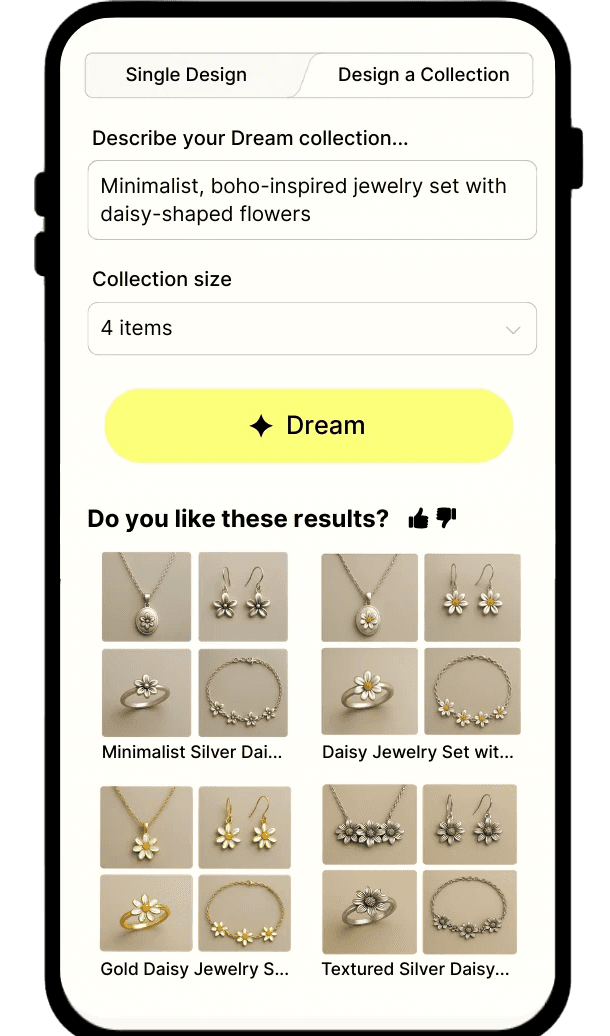
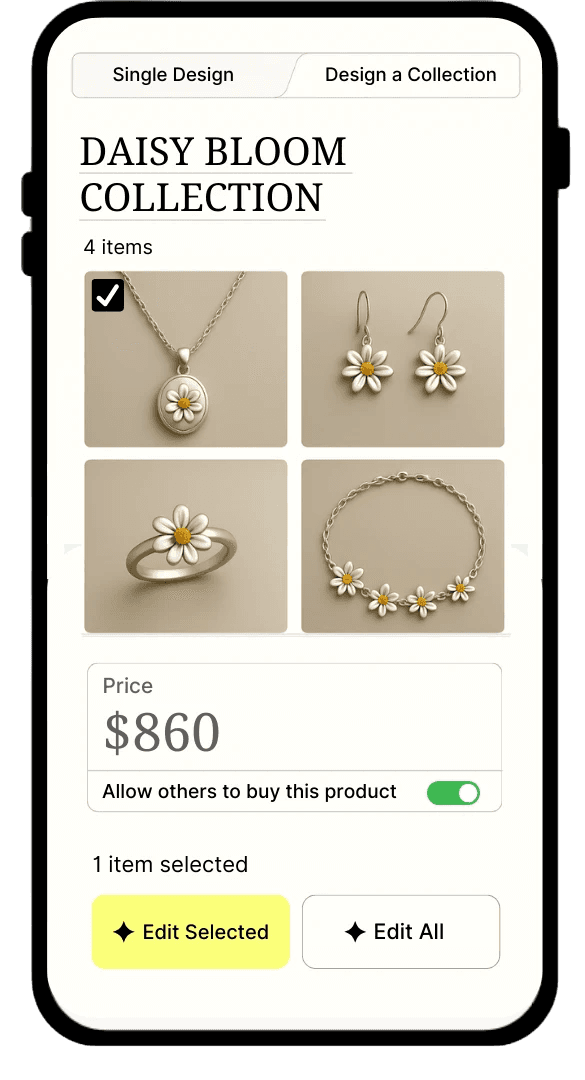
Instead of designing one item at a time, creators can generate and refine entire collections from a single prompt.

Supports creators who think in sets rather than single items
Speeds up high output creative workflows
Makes it easier to design and sell cohesive product lines
WHY IT MATTERS
A Design a Collection option extends the existing prompt flow
One prompt generates multiple coordinated items
Items can be selected and edited individually or in bulk
HOW IT WORKS

Encourages more creation within each session
Increases engagement across workflows
Creates stronger monetization opportunities for sellers
IMPACT

Remix History
Solution 2:
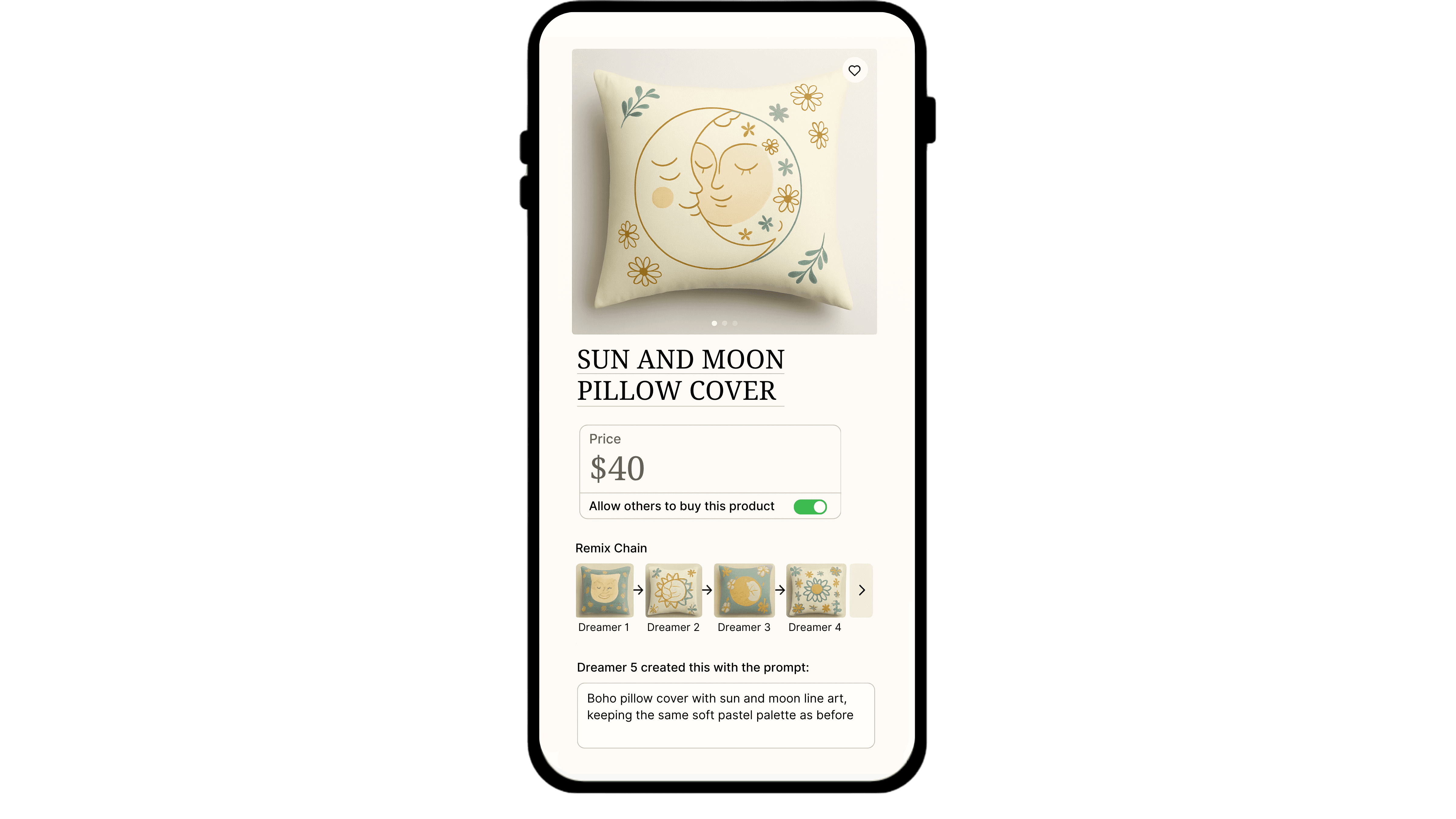
A visible chain showing how designs evolve through remixing, turning creation into a collaborative process.
Gives credit to upstream creators
Encourages iteration and reuse of ideas
Makes the creative process feel shared rather than isolated
WHY IT MATTERS
Each design includes a remix chain showing its evolution
Remixed from labels highlight attribution
Optional feedback or commenting layers support collaboration
HOW IT WORKS
Increases remix activity across the platform
Builds long term engagement through shared creation
Strengthens the creator ecosystem
IMPACT




Designs are generated individually, making it hard to build cohesive product lines
There is no structured way to evolve an idea across multiple outputs
Remixing exists, but the creative lineage is not visible
Too one-off
Limited iteration
Hidden collaboration

Thanks for stopping by :)


© 2025 Sarah Elsharkawi
fueled by coffee